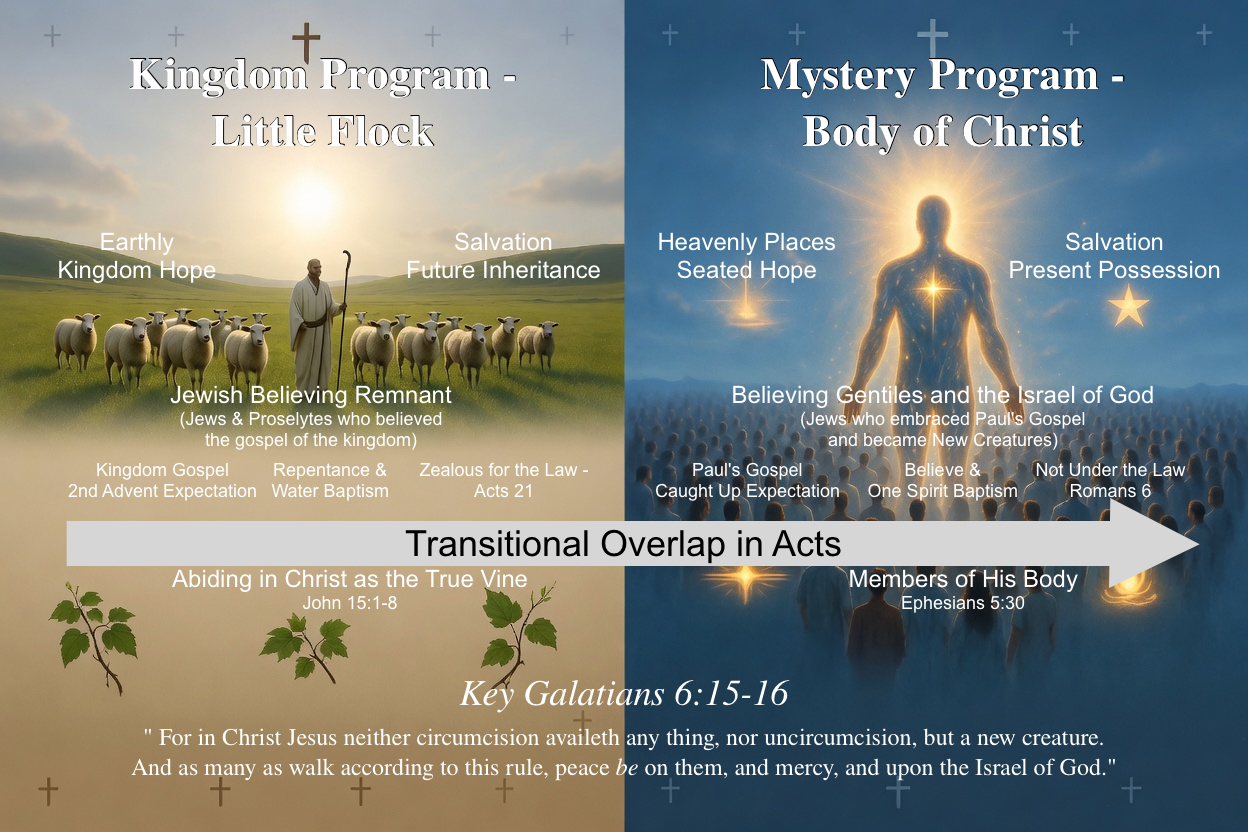
“For in Christ Jesus neither circumcision availeth any thing, nor uncircumcision, but a new creature. And as many as walk according to this rule, peace be on them, and mercy, and upon the Israel of God.” (Galatians 6:15-16 KJV)
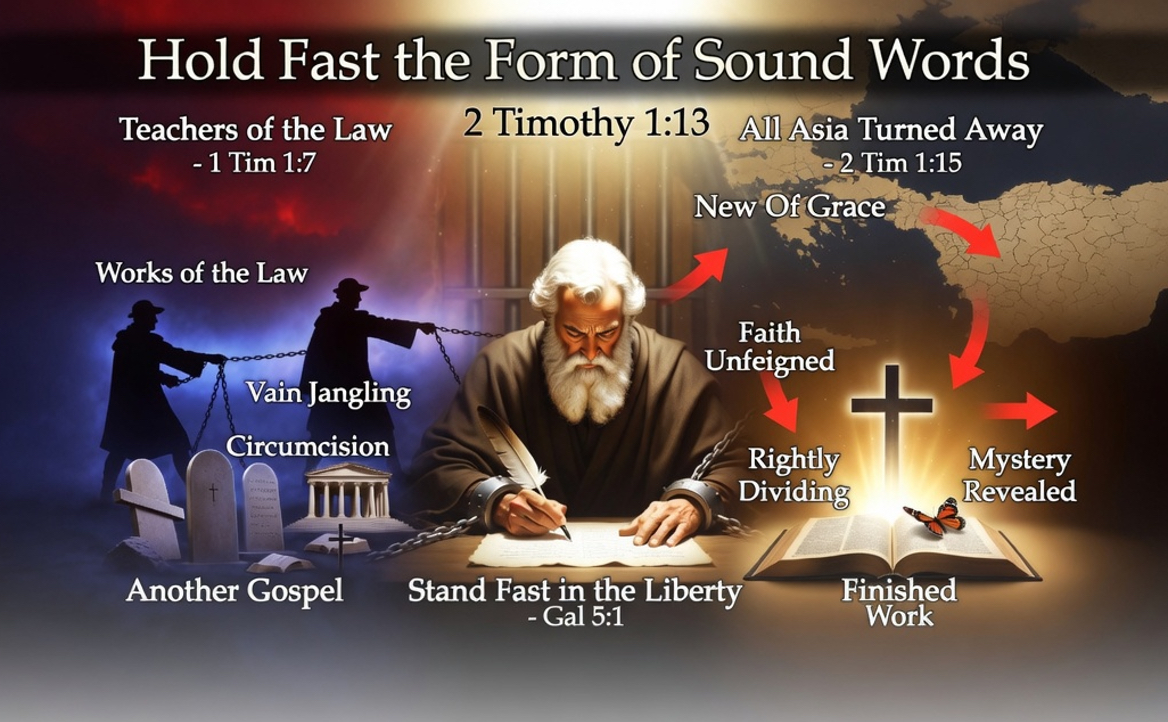
Have you ever wondered why Paul would single out “the Israel of God” with a special blessing right after declaring that nothing avails but a new creature? This verse sits at the end of Galatians, a letter written to defend the pure grace gospel against those trying to bring believers back under the law and circumcision. When we rightly divide the word of truth according to the pattern delivered to the Apostle Paul, the meaning becomes clear and liberating. We will walk through the scriptures together, staying faithful to the clarity of the scriptures rightly divided. Our goal is to see the distinction between the kingdom program and the mystery program without blending them.
The Two Distinct Programs in Scripture
From the beginning of Acts we see two programs operating side by side during a transitional period:
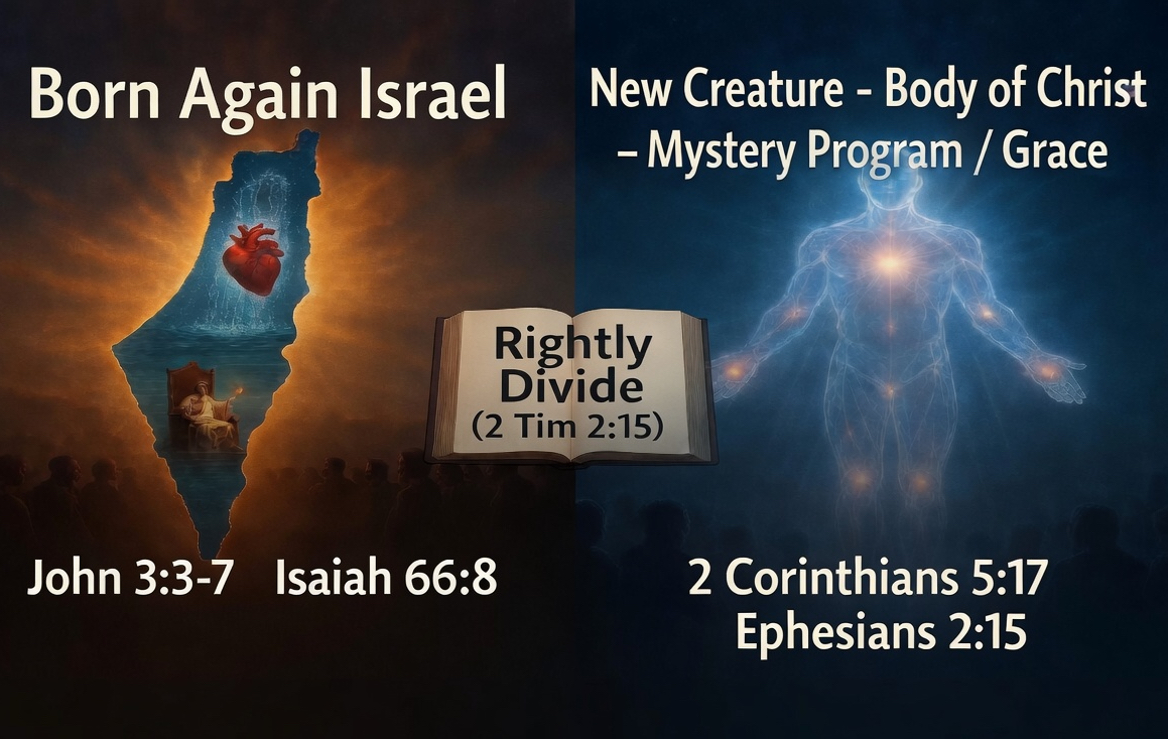
- The kingdom / prophetic program (spoken since the world began) – This was the message preached by John the Baptist, Jesus, and the Twelve. It offered the earthly kingdom to Israel if the nation would repent and receive their King (Matthew 3:2; 4:17; Acts 3:19-21).
- The mystery program (kept secret since the world began) – This was revealed later to the Apostle Paul for the Body of Christ. It forms one new man where Jew and Gentile are made completely one with a heavenly calling (Ephesians 3:1-9; Colossians 1:25-27).
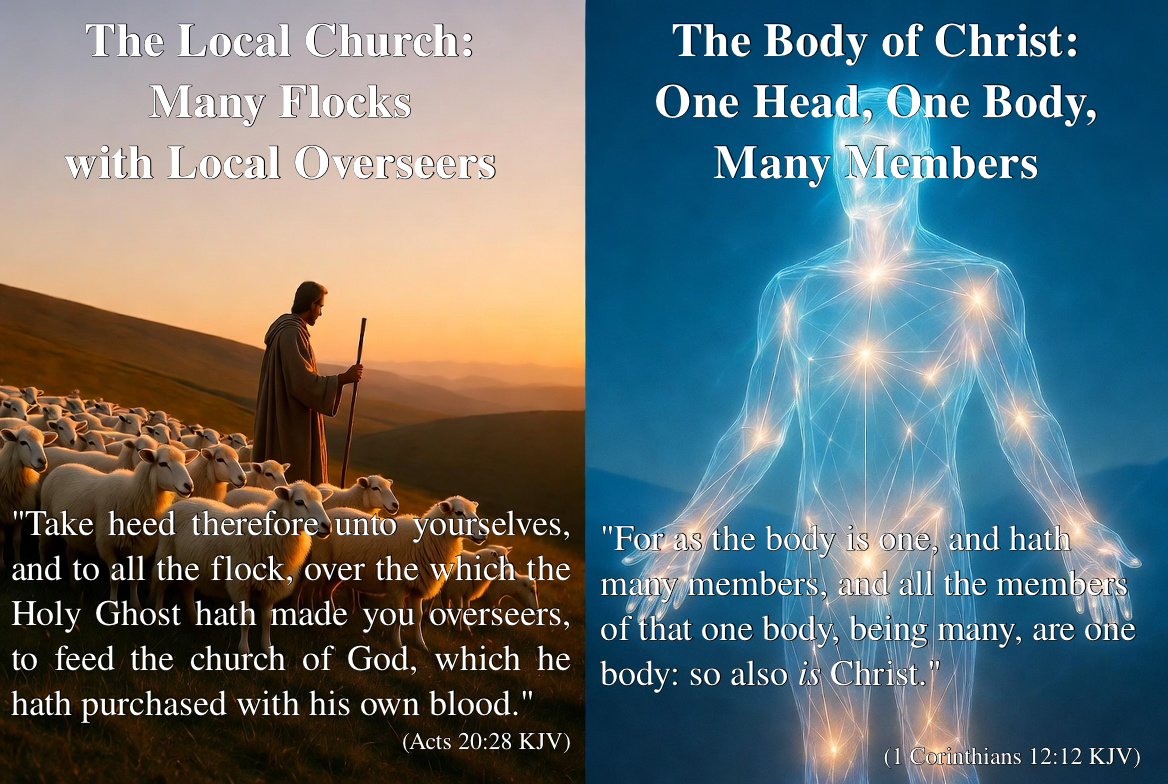
The little flock (Luke 12:32) and the churches of Judaea (Galatians 1:22) belong to the kingdom program. These were the believing Jewish remnant who trusted Jesus as the Messiah under the gospel of the kingdom. They repented, were baptized, received the Holy Ghost, and looked for the restoration of the kingdom to Israel (Acts 1:6; 3:19-21). Even years later in Acts 21 many of them were still “zealous of the law” (Acts 21:20).
In contrast, the churches of the Gentiles (Romans 16:4) are the fruit of Paul’s ministry under the mystery. Paul uses this phrase in Romans 16:4 when thanking Priscilla and Aquila:
“Who have for my life laid down their own necks: unto whom not only I give thanks, but also all the churches of the Gentiles.” (Romans 16:4 KJV)
These assemblies operate on the truth that “in Christ Jesus neither circumcision availeth any thing, nor uncircumcision, but a new creature” (Galatians 6:15). The “churches of the Gentiles” include both Gentiles and those Jews who have embraced Paul’s gospel and entered the new-creature liberty. They form the one Body where Jew and Gentile are made completely one:
“For by one Spirit are we all baptized into one body, whether we be Jews or Gentiles…” (1 Corinthians 12:13 KJV)
“Having abolished in his flesh the enmity, even the law of commandments contained in ordinances; for to make in himself of twain one new man, so making peace.” (Ephesians 2:15 KJV)
Paul himself drew this distinction plainly:
“But contrariwise, when they saw that the gospel of the uncircumcision was committed unto me, as the gospel of the circumcision was unto Peter… they gave to me and Barnabas the right hands of fellowship; that we should go unto the heathen, and they unto the circumcision.” (Galatians 2:7-9 KJV)
The Little Flock and Churches of Judaea
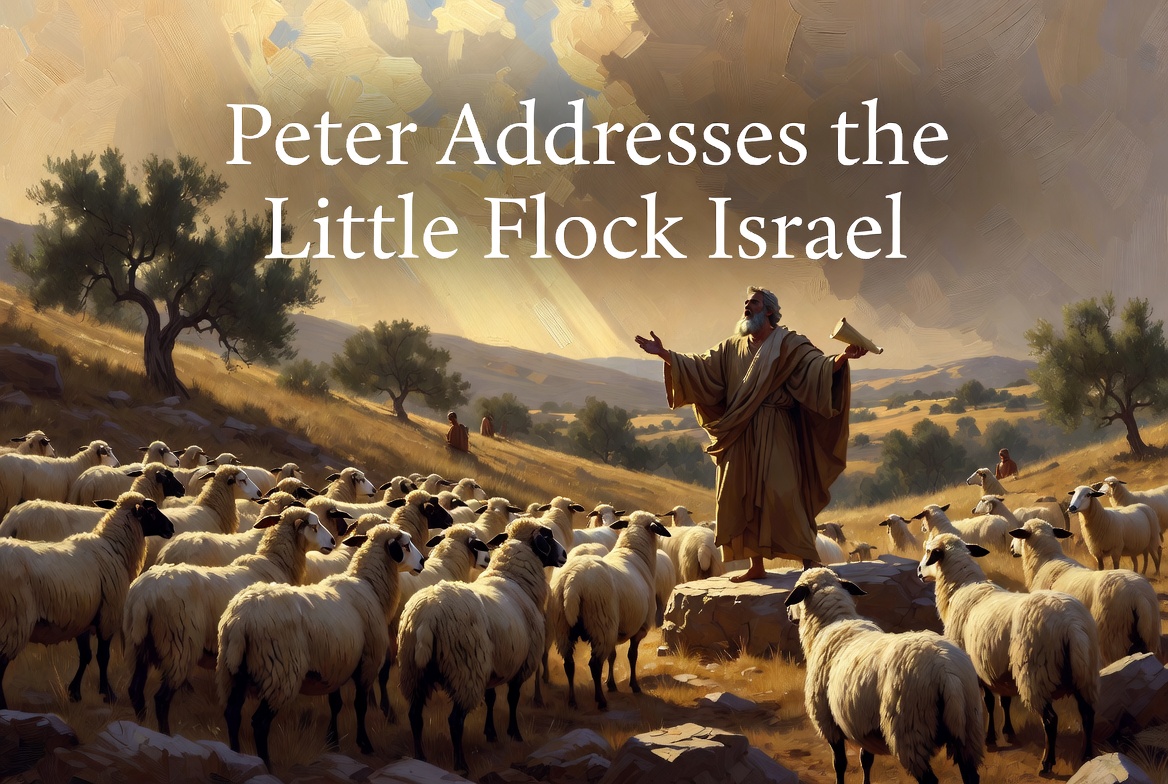
The little flock was the small believing remnant of Israel during Christ’s earthly ministry and early Acts. Jesus spoke of them this way:
“Fear not, little flock; for it is your Father’s good pleasure to give you the kingdom.” (Luke 12:32 KJV)
They were saved under the kingdom gospel. They had real faith, real remission of sins through repentance and water baptism (Acts 2:38), and a genuine hope — the earthly kingdom. However, most of them continued under the law and the prophetic program. They had not yet been transferred into the full new-creature liberty of the mystery.
These believers formed the early churches of Judaea that Paul mentions in Galatians 1:22:
“And was unknown by face unto the churches of Judaea which were in Christ.” (Galatians 1:22 KJV)
Even after Paul’s conversion and the revelation of the mystery, many in these churches remained zealous for the law. In Acts 21 the elders in Jerusalem tell Paul:
“And when they heard it, they glorified the Lord, and said unto him, Thou seest, brother, how many thousands of Jews there are which believe; and they are all zealous of the law.” (Acts 21:20 KJV)
This shows the overlap period. God was patient with them while the mystery was being fully revealed through Paul. Some from this group (and others like them) eventually did embrace Paul’s gospel and became part of the Israel of God. Others continued in their kingdom hope, still looking for the earthly restoration of Israel.
Importantly, the little flock was “in Christ” in the sense of being part of the vine that Jesus described in John 15:
“I am the true vine, and my Father is the husbandman. Every branch in me that beareth not fruit he taketh away: and every branch that beareth fruit, he purgeth it, that it may bring forth more fruit.” (John 15:1-2 KJV)
“I am the vine, ye are the branches: He that abideth in me, and I in him, the same bringeth forth much fruit: for without me ye can do nothing.” (John 15:5 KJV)
The Hebrew epistles (written primarily to the little flock and scattered Jewish believers) continue this vine/branch teaching and emphasize abiding in Christ as the key to fruitfulness under the kingdom program:
- 1 John 2:6, 24 – “He that saith he abideth in him ought himself also so to walk, even as he walked… Let that therefore abide in you, which ye have heard from the beginning.”
- 1 John 4:13-16 – “Hereby know we that we dwell in him, and he in us, because he hath given us of his Spirit… And we have known and believed the love that God hath to us. God is love; and he that dwelleth in love dwelleth in God, and God in him.”
- Hebrews 3:6 – “But Christ as a son over his own house; whose house are we, if we hold fast the confidence and the rejoicing of the hope firm unto the end.”
This “in Christ” relationship was organic and fruit-bearing under the kingdom program — branches connected to the vine (Christ) for fruitfulness on earth. It is different from the positional, spiritual baptism into the one Body that Paul describes for this dispensation. The little flock was connected to Christ as the true vine under the prophetic program, but they were not yet part of the one new man, the Body of Christ, with its heavenly position and mystery blessings.
Have you noticed how God was longsuffering with the little flock during this transition? He didn’t force them to instantly drop everything they had known under the kingdom program. Instead, He allowed the programs to overlap while the mystery was being revealed. What does that tell us about God’s patience with believers who are still growing in their understanding of grace today?
The New Creature – Paul’s Distinct Mystery Revelation
The phrase “new creature” is not a general description of salvation. It is a specific mystery truth revealed through Paul for this dispensation of grace:
“Therefore if any man be in Christ, he is a new creature: old things are passed away; behold, all things are become new.” (2 Corinthians 5:17 KJV)
“For in Christ Jesus neither circumcision availeth any thing, nor uncircumcision, but a new creature.” (Galatians 6:15 KJV)
This is the capstone of Paul’s argument in Galatians 6. The old distinctions (circumcision or uncircumcision) no longer matter. What matters now is this brand-new creation.
Paul describes the new creature in several key ways:
- Spiritually circumcised – “In whom also ye are circumcised with the circumcision made without hands, in putting off the body of the sins of the flesh by the circumcision of Christ” (Colossians 2:11 KJV).
- Dead to the law – “Wherefore, my brethren, ye also are become dead to the law by the body of Christ” (Romans 7:4 KJV).
- Quickened and seated in heavenly places – “Even when we were dead in sins, hath quickened us together with Christ… and hath raised us up together, and made us sit together in heavenly places in Christ Jesus” (Ephesians 2:5-6 KJV).
- Complete in Christ – “And ye are complete in him, which is the head of all principality and power” (Colossians 2:10 KJV).
- One new man – “Having abolished in his flesh the enmity… for to make in himself of twain one new man, so making peace” (Ephesians 2:15 KJV).
These blessings were not revealed or given during Christ’s earthly ministry or early Acts. They belong exclusively to the dispensation of the grace of God. The new creature is the spiritual reality for every believer who trusts Paul’s gospel today — whether Jew or Gentile. It is not a gradual improvement of the old man. It is a brand-new creation.
If the full new-creature blessings (complete in Christ, seated in heavenly places, dead to the law, one new man) were already true for the disciples during Jesus’ earthly ministry or early Acts, why didn’t Jesus or Peter ever teach them that way? Doesn’t this show that the new creature is part of the distinct mystery revealed to Paul?
The Overlap in Acts 21:18-26 and Paul Becoming “as a Jew”
The tension we see in Acts 21 perfectly illustrates the overlap between the two programs and Paul’s wisdom in handling it:
“And the day following Paul went in with us unto James; and all the elders were present. And when he had saluted them, he declared particularly what things God had wrought among the Gentiles by his ministry. And when they heard it, they glorified the Lord, and said unto him, Thou seest, brother, how many thousands of Jews there are which believe; and they are all zealous of the law.” (Acts 21:18-20 KJV)
These were real believers — the little flock — but most had not yet embraced the new-creature liberty. They were still zealous for the law and operating under the kingdom program. The elders asked Paul to join four men who had a vow, shave his head, and pay their expenses “that they may know that thou thyself also walkest orderly, and keepest the law” (Acts 21:24).
Paul participated (he wasn’t under the law himself — Romans 6:14; Galatians 2:19), but he did it for the sake of these weak Jewish brethren so that the gospel wouldn’t be hindered among them. This is classic transitional behavior during the overlap period. Some from this group (and others like them) eventually did embrace Paul’s gospel and became part of the Israel of God.
Paul himself explained his approach in 1 Corinthians 9:20:
“And unto the Jews I became as a Jew, that I might gain the Jews; to them that are under the law, as under the law, that I might gain them that are under the law.” (1 Corinthians 9:20 KJV)
Paul was not putting himself back under the law. He was becoming “as a Jew” to the Jews for the sake of the gospel. This shows his wisdom and love for the weak brethren in the little flock while he continued to preach the full grace of God to the Gentiles. The overlap allowed the kingdom offer to continue for a season while the mystery was being revealed.
Who Is “the Israel of God” in Galatians 6:16?
Right after stating the new-creature rule, Paul writes:
“And as many as walk according to this rule, peace be on them, and mercy, and upon the Israel of God.” (Galatians 6:16 KJV)
“The Israel of God” is the Jewish remnant who embraced Paul’s gospel and began walking according to the new-creature rule. They are the portion of the little flock that stepped out of the old law/kingdom program and into the liberty of the mystery. They are genuine members of the one Body of Christ with the same standing, blessings, and heavenly hope as Gentile believers.
They are not the entire little flock. The broader little flock in Acts 21 was still largely zealous for the law and operating under the kingdom program. Only those who fully accepted the new-creature truth became “the Israel of God.”
Examples include Barnabas (a Levite who sold his land to help the early believers and became Paul’s close companion on missionary journeys, Acts 4:36-37; 13:2), Silas (also called Silvanus, who traveled with Paul, helped establish churches, and co-authored letters, Acts 15:40; 1 Thessalonians 1:1), Aquila and Priscilla (a Jewish couple who risked their lives for Paul, hosted churches in their home, and explained the way of God more perfectly to Apollos in Acts 18:24-26), and Apollos himself (a powerful preacher who, after being instructed more perfectly in the way of God by Aquila and Priscilla, became a great help to the Body of Christ). And others such as Timothy (whose mother was Jewish and who assisted Paul extensively) and various Jewish co-workers mentioned in Paul’s greetings (e.g., in Romans 16). These men were Jews who fully embraced Paul’s gospel, ministered to the Body of Christ, and walked according to the new-creature rule. They became part of the Israel of God — the faithful Jewish remnant in this age.
Paul also shows his care for these three distinct groups in 1 Corinthians 10:32:
“Give none offence, neither to the Jews, nor to the Gentiles, nor to the church of God.” (1 Corinthians 10:32 KJV)
Here we see the three groups clearly distinguished during the transition:
- The Jews = the little flock / churches of Judaea still under the kingdom program.
- The Gentiles = the new believers coming in under Paul’s ministry.
- The church of God = the one Body of Christ, which includes the Israel of God (Jews who had fully embraced the new-creature rule) along with Gentiles.
This verse helps us understand why Paul was so careful in his ministry — he did not want to offend any of the three groups while the programs overlapped.
This is why Paul can pronounce blessing on “the Israel of God” right after talking about the new creature — he is highlighting the Jews who have come all the way over to the grace rule. They are the faithful Jewish remnant in this age who have accepted the mystery revelation. They are saved the same way we are (by grace through faith in Paul’s gospel), they share the new-creature blessings with us, and they are members of the one Body. But Paul still gives them this special designation (“the Israel of God”) to honor their place as the true remnant from Israel who have believed the grace gospel.
If “the Israel of God” simply meant the whole Church or the entire little flock, why would Paul single them out with a special blessing in a letter written to stop people from putting Gentiles under the law? Doesn’t the context suggest he is pointing to the Jews who had fully accepted the new-creature liberty?
Peter and the Twelve – Their Distinct Kingdom Role
Peter was genuinely saved during Christ’s earthly ministry. He trusted Jesus as the Messiah, received the Holy Spirit at Pentecost, and was used mightily in the early kingdom offer to Israel. He respected Paul and called his epistles scripture (2 Peter 3:15-16). However, Peter’s primary commission remained “to the circumcision” (Galatians 2:7-9). His epistles are written to the scattered Jewish remnant with strong kingdom/prophetic language and an earthly hope. He never shifts to teaching the full mystery / one Body / heavenly new-creature position as his main message.
Jesus promised the Twelve:
“Verily I say unto you, That ye which have followed me, in the regeneration when the Son of man shall sit in the throne of his glory, ye also shall sit upon twelve thrones, judging the twelve tribes of Israel.” (Matthew 19:28 KJV)
This promise stands. Peter and the Eleven have a special future role in the earthly kingdom. They were not transferred into the full new-creature / one-Body mystery program in the same way as the Jews who became the Israel of God.
Peter’s own writings confirm this distinction. In 1 Peter he addresses the scattered strangers (the little flock) with language full of Old Testament prophetic imagery:
“Peter, an apostle of Jesus Christ, to the strangers scattered throughout Pontus, Galatia, Cappadocia, Asia, and Bithynia, Elect according to the foreknowledge of God the Father…” (1 Peter 1:1-2 KJV)
He speaks of a “lively hope” tied to the resurrection and an inheritance “reserved in heaven” for them, but the overall tone and hope remain connected to Israel’s prophetic program (1 Peter 1:3-4; 2:9-10). In 2 Peter he warns them about false teachers and urges them to grow in grace while waiting for the day of the Lord and new heavens and new earth (2 Peter 3:10-13). This is kingdom hope language, not the “already seated in heavenly places” mystery truth Paul gives us in Ephesians and Colossians.
Peter was saved, he was filled with the Spirit, and he will be in glory — but his apostolic office and promised inheritance remain tied to the earthly kingdom program for Israel. He did not become part of the “Israel of God” group that fully embraced the new-creature liberty and the heavenly calling of the one Body. This keeps God’s Word perfectly consistent: Peter keeps his promised earthly role, while the Israel of God represents the Jewish remnant that stepped into the mystery grace program.
If Peter had fully shifted into the new-creature / one-Body program, would Jesus’ promise of the 12 thrones still make sense? Doesn’t keeping that promise intact show that God can have different programs and different inheritances running at the same time — one heavenly for the Body, one earthly for Israel and her apostles?
The Romans 11 Remnant
Paul explains the current situation of Israel in Romans 11. He shows both God’s faithfulness to Israel and the present reality of blindness:
“I say then, Hath God cast away his people? God forbid. For I also am an Israelite, of the seed of Abraham, of the tribe of Benjamin.” (Romans 11:1 KJV)
“Even so then at this present time also there is a remnant according to the election of grace.” (Romans 11:5 KJV)
“What then? Israel hath not obtained that which he seeketh for; but the election hath obtained it, and the rest were blinded.” (Romans 11:7 KJV)
“For I would not, brethren, that ye should be ignorant of this mystery, lest ye should be wise in your own conceits; that blindness in part is happened to Israel, until the fulness of the Gentiles be come in. And so all Israel shall be saved: as it is written, There shall come out of Sion the Deliverer, and shall turn away ungodliness from Jacob.” (Romans 11:25-26 KJV)
The remnant according to the election of grace is the faithful Jewish portion that has believed in this present age. Some of this remnant have embraced Paul’s gospel and become the Israel of God — part of the one Body with a heavenly calling. The broader nation remains blinded “until the fulness of the Gentiles be come in,” after which “all Israel shall be saved” nationally in the future earthly kingdom.
Peter’s own words in 2 Peter 3:15-16 fit perfectly here:
“And account that the longsuffering of our Lord is salvation; even as our beloved brother Paul also according to the wisdom given unto him hath written unto you; As also in all his epistles, speaking in them of these things; in which are some things hard to be understood, which they that are unlearned and unstable wrest, as they do also the other scriptures, unto their own destruction.” (2 Peter 3:15-16 KJV)
Peter acknowledges that Paul’s writings contain things that are hard to understand for the little flock. Yet some of that little flock did believe Paul’s gospel and became part of the election of grace — the Israel of God. This shows that the remnant in Romans 11 is being formed as individual Jews accept the mystery truths Paul revealed, even while the nation as a whole remains blinded. The Israel of God is that portion of the remnant that has stepped into the new-creature liberty.
Have you seen how Romans 11 ties the current remnant (including the Israel of God) to the future national salvation of Israel? Doesn’t this show that God is working with both the mystery program today and the prophetic program for the future at the same time?
Inheritance – Earthly Kingdom or Heavenly Calling?
This is one of the most important distinctions we must rightly divide. The inheritance for those Jews who fully embraced Paul’s gospel (the Israel of God) is heavenly, while the broader prophetic promises to Israel remain earthly.
Paul makes this clear for the Body of Christ:
“Blessed be the God and Father of our Lord Jesus Christ, who hath blessed us with all spiritual blessings in heavenly places in Christ.” (Ephesians 1:3 KJV)
“And hath raised us up together, and made us sit together in heavenly places in Christ Jesus.” (Ephesians 2:6 KJV)
“For our conversation is in heaven; from whence also we look for the Saviour, the Lord Jesus Christ.” (Philippians 3:20 KJV)
“Giving thanks unto the Father, which hath made us meet to be partakers of the inheritance of the saints in light.” (Colossians 1:12 KJV)
Jews who fully embraced Paul’s gospel and became part of the Israel of God are members of the one Body. Their hope and inheritance are heavenly. They do not inherit the earthly kingdom promised to national Israel. They have been transferred into the mystery program.
In contrast, Peter and the Eleven retain their promised earthly role:
“Verily I say unto you, That ye which have followed me, in the regeneration when the Son of man shall sit in the throne of his glory, ye also shall sit upon twelve thrones, judging the twelve tribes of Israel.” (Matthew 19:28 KJV)
God keeps both programs intact without contradiction. The earthly kingdom promises to Israel (land, throne of David, national restoration) will be fulfilled in the future when “all Israel shall be saved” (Romans 11:26). The Israel of God today has the heavenly inheritance of the Body of Christ.
Equality in the One Body
In the Body of Christ there is no higher or lower standing between Jewish and Gentile believers. Paul repeatedly emphasizes this truth so that no one would think Jewish believers (even those from the Israel of God) have any advantage or higher position:
“There is neither Jew nor Greek, there is neither bond nor free, there is neither male nor female: for ye are all one in Christ Jesus.” (Galatians 3:28 KJV)
“For by one Spirit are we all baptized into one body, whether we be Jews or Gentiles…” (1 Corinthians 12:13 KJV)
“Where there is neither Greek nor Jew, circumcision nor uncircumcision, Barbarian, Scythian, bond nor free: but Christ is all, and in all.” (Colossians 3:11 KJV)
The Jewish believers who are part of the Israel of God have exactly the same position, blessings, and hope as Gentile believers. They are not a “special class” inside the Body. The label “Israel of God” simply identifies the faithful Jewish remnant who accepted the grace truth — it does not give them superior standing. This equality is one of the great glories of the mystery: God has made one new man where the old distinctions no longer determine position or blessing (Ephesians 2:14-16).
If the Israel of God had a higher standing in the Body, wouldn’t that contradict everything Paul fought for in Galatians? Doesn’t the complete equality in the one Body actually magnify the “unsearchable riches of Christ” even more?
The Tension Between the Little Flock and Paul – Examples
The overlap created real tension between the little flock (still operating under the kingdom program) and Paul’s ministry of the mystery. Paul often addressed this tension by treating the Jewish believers who were still weak in understanding as “weaker brothers” (Romans 14 and 1 Corinthians 8).
Here are some clear examples with scripture:
- Acts 15 – The Jerusalem council dealt with whether Gentile believers needed to be circumcised and keep the law of Moses. The little flock leaders (including James) were concerned about the growing number of Gentiles, while Paul defended the pure grace gospel (Acts 15:1-29).
- Acts 21:18-26 – The elders in Jerusalem told Paul about the thousands of Jewish believers who were “zealous of the law.” They asked Paul to join in a vow to calm them. This shows the ongoing tension — the little flock was still tied to the law, while Paul preached liberty from it (Acts 21:18-26).
- Galatians 2:11-14 – Paul publicly rebuked Peter in Antioch when Peter drew back from eating with Gentiles because of fear of the circumcision party. This highlights the pressure the little flock leaders felt from the Jewish believers who had not yet embraced the new-creature liberty (Galatians 2:11-14).
- The Titus vs. Timothy Circumcision Decision – Paul refused to let Titus (a Greek) be circumcised when false brethren tried to bring him under the law, because it would have compromised the truth of the gospel (Galatians 2:3-5). Yet he had Timothy (whose mother was Jewish) circumcised “because of the Jews which were in those quarters” so as not to offend the weak Jewish brethren and hinder the gospel (Acts 16:3). This perfectly illustrates Paul’s principle of becoming “as a Jew” to the Jews (1 Corinthians 9:20) while never compromising the liberty of the new creature for those who had fully embraced it.
- Galatians overall – The whole letter was written because Judaizers (influenced by the kingdom mindset) were trying to bring Gentile believers under the law. Paul defends the mystery gospel fiercely.
- Romans 14 and 1 Corinthians 8 – Paul taught believers not to judge or cause a weaker brother to stumble. He applied this principle to Jewish believers who still had scruples about meat offered to idols or certain days. He was willing to limit his own liberty for their sake, showing love and patience toward the little flock who had not yet fully grasped the new-creature liberty:“Him that is weak in the faith receive ye, but not to doubtful disputations… Let us not therefore judge one another any more: but judge this rather, that no man put a stumblingblock or an occasion to fall in his brother’s way.” (Romans 14:1, 13 KJV)“But take heed lest by any means this liberty of yours become a stumblingblock to them that are weak.” (1 Corinthians 8:9 KJV)
These examples show the real tension during the transition. The little flock was saved and part of God’s plan, but they were still operating under the old program while Paul was revealing the new. Paul’s approach to the “weaker brothers” demonstrates grace in action — he did not force sudden change but walked in love while holding firmly to the truth of the mystery.
Have you seen similar tensions today when people mix law and grace? How does understanding the little flock and Paul’s treatment of weaker brothers help us have patience while still boldly proclaiming the pure grace gospel?
Conclusion – The Beauty of Right Division
God is doing something brand new in this dispensation through Paul: forming the one Body of Christ with its heavenly calling. At the same time, He has preserved a faithful Jewish remnant (the Israel of God) who have embraced the new-creature rule and now enjoy the same blessings we do. The broader little flock that remained in the kingdom program still has its earthly hope, and Peter and the Twelve retain their promised role in the future kingdom.
This distinction is one of the most beautiful truths in the Bible. It shows God’s perfect wisdom and faithfulness. He has not cast away His people Israel — a remnant is being formed now according to grace, and the nation as a whole will be saved in the future. In the meantime, He has revealed the mystery to us through Paul so that we can enjoy our heavenly position in the one Body today.
Right division helps us avoid confusion, walk in true liberty, and appreciate the unsearchable riches of Christ. It keeps us from mixing law and grace, from turning the Church into spiritual Israel, and from robbing believers of the distinct blessings of this dispensation.
“Study to shew thyself approved unto God, a workman that needeth not to be ashamed, rightly dividing the word of truth.” (2 Timothy 2:15 KJV)
May the Lord give us all grace to walk according to this rule, holding fast the form of sound words we have heard from Paul.
Grace and peace be multiplied unto you through the knowledge of God and of Jesus our Lord.
© 2026 Edward R. Cross